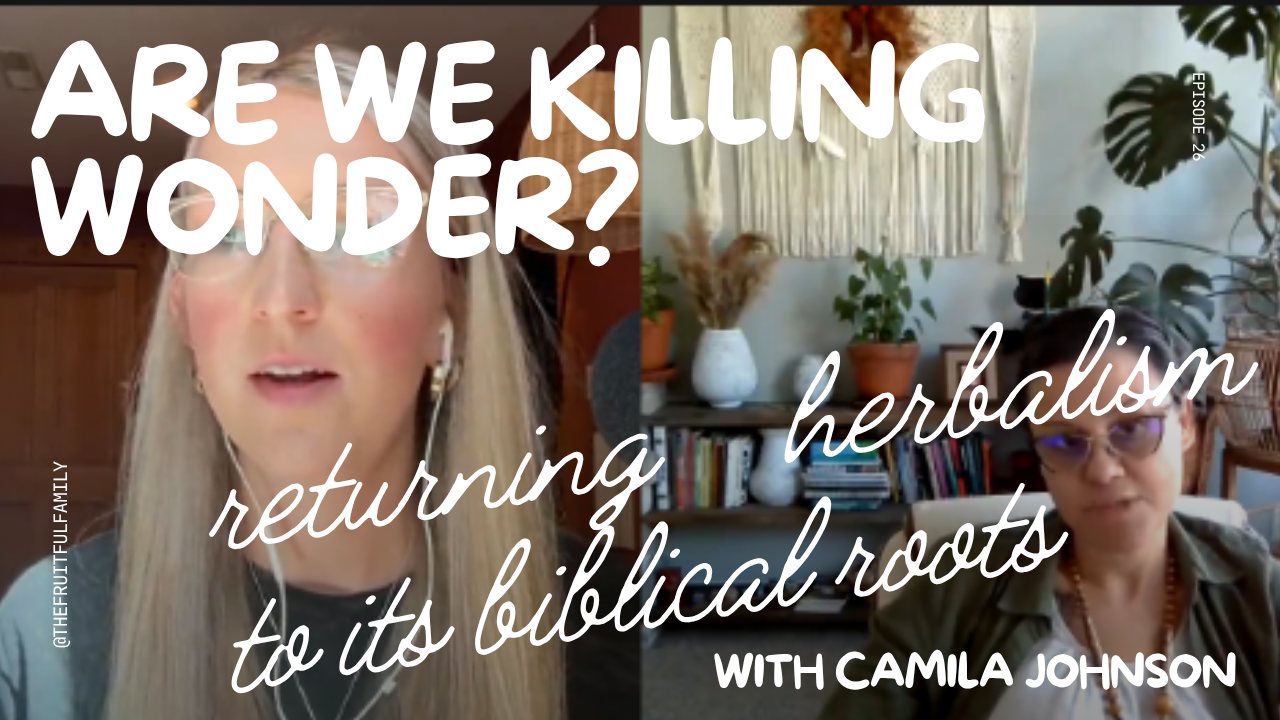
What if homeschooling could do more than teach children to pass tests? What if it helped them grow in faith, cultivate lifelong curiosity, and understand the world God created?
In a recent episode of Prayers for Parents, I sat down with Camila Johnson, a former public school educator and homeschooling mom of four, to discuss how Christian education can bring together faith, nature, health, and family discipleship.
Camila is the creator of Eden’s Table, a yearlong homeschool curriculum that uses plants and nature study to explore multiple subjects through a biblical worldview.
Why Wonder Matters in Christian Education
Children are naturally curious. They ask questions, investigate the world around them, and delight in discovering something new. But when education focuses primarily on standardized tests and prescribed lessons, there can be little room for that curiosity to flourish.
Camila believes that nurturing wonder is essential to raising lifelong learners.
Rather than treating every question as a distraction, parents can use those moments as opportunities to explore alongside their children. You don't need to know every answer. In fact, saying, “I don't know—let's find out together,” models a valuable skill: learning how to investigate, ask better questions, and pursue truth.
Following a child's interests can also help parents recognize the unique ways God has wired each child and encourage them to keep discovering the world around them.
Connecting Nature Study to Faith and Worship
Nature study offers a beautiful opportunity to teach children about God's character through His creation.
Whether children are growing plants, observing insects, exploring the garden, or learning how the human body works, these experiences can prompt meaningful conversations about God's wisdom, creativity, and provision.
Wonder can also deepen worship. As children learn more about creation and study Scripture with curiosity, they have opportunities to grow in their understanding of the Creator.
The goal isn't simply to help children accumulate knowledge. It's to help them see the world through a biblical worldview and respond to God's goodness with gratitude and worship.
Teaching Children to Steward Their Bodies
Another important part of Eden’s Table is helping children develop a foundational understanding of health and the human body.
Many children learn about their bodies primarily when something goes wrong. But everyday experiences—such as getting a scrape, feeling thirsty, resting when tired, or recovering from an illness—can become opportunities to learn.
Parents can explain age-appropriate concepts about how the body works, encourage healthy habits, and help children recognize when they need support from a trusted adult or healthcare professional.
These conversations also provide opportunities to marvel at the intricacy of God's design and discuss what it means to care responsibly for the bodies He has given us.
Health education doesn't have to be disconnected from faith. It can be another way to cultivate gratitude, wisdom, and stewardship.
Why the Dinner Table Matters for Family Discipleship
The name Eden’s Table reflects another of Camila's convictions: strong families are built through ordinary, repeated moments of connection.
Family meals offer a natural setting for conversation, shared learning, and discipleship. Even a short discussion over dinner can help children process what they've learned, ask questions, and connect ideas across generations.
Camila incorporates discussion cards into her curriculum, organized around four themes: faith, family, wonder, and the body. These prompts help families revisit the week's learning and create space for every family member to participate.
You don't need an elaborate plan to make these moments meaningful. A thoughtful question, a shared meal, or a conversation about something your child discovered that day can become part of the everyday work of forming their hearts and minds.
Learning Alongside Your Children
One of the most helpful features of Eden’s Table is its open-and-go approach. Instead of requiring parents to master every lesson beforehand, the curriculum invites them to learn alongside their children.
This takes some pressure off homeschooling parents while modeling humility and curiosity. Children get to see that learning doesn't end when school is over—and that adults are still growing, asking questions, and discovering new things.
Christian education can be about much more than completing assignments. It can help children grow in knowledge, cultivate wonder, strengthen family relationships, and learn to see God's fingerprints throughout creation.
As parents, we have the opportunity to nurture that wonder one question, one discovery, and one ordinary family moment at a time.
Listen to the full conversation on Prayers for Parents to hear more from Camila Johnson about Eden’s Table, Christian homeschooling, nature study, health literacy, and cultivating wonder in your children.
Explore more resources for Christian parenting and family discipleship at The Fruitful Family.