Children Are a Blessing: Why Christian Parents Need a Biblical Vision for Family
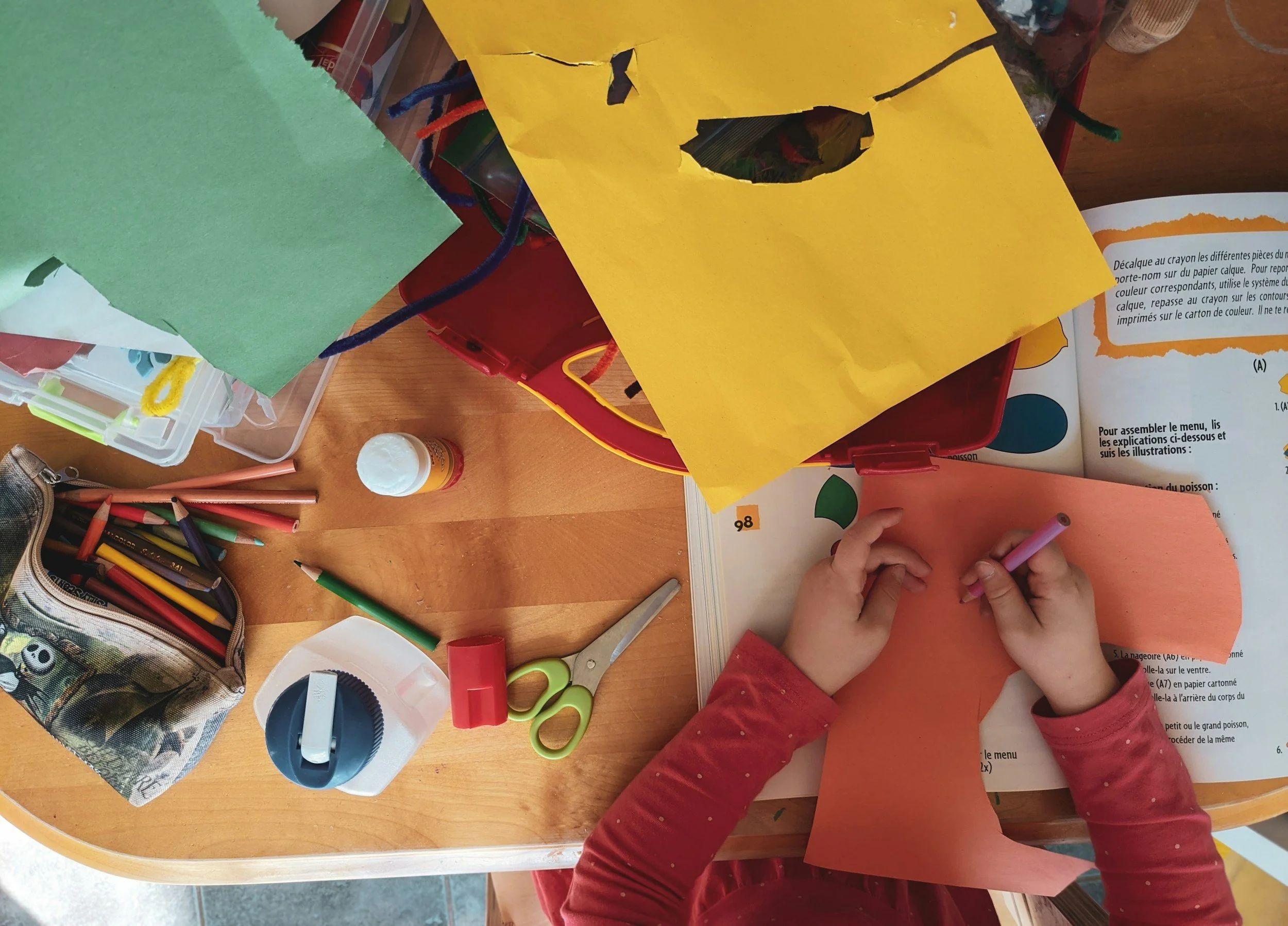
From Prayers for Parents episode 20
Children are a blessing.
That statement sounds simple, but in a culture that often treats children as an inconvenience, a financial liability, or an obstacle to personal freedom, believing it can require a deliberate return to Scripture.
We live in a world that often tells young adults to build their lives first.
Finish school.
Establish your career.
Get financially secure.
Travel.
Enjoy your freedom.
Then, someday, when everything is perfectly aligned, maybe consider having children.
And even within Christian communities, these ideas can quietly shape the way we think about marriage, family, and children.
But what happens when we step away from the cultural narrative and ask a different question?
What does God say about children?
The Bible gives us a remarkably different vision.
Children Are a Heritage From the Lord
Psalm 127 provides one of the clearest biblical pictures of children:
“Children are a heritage from the Lord, offspring a reward from him. Like arrows in the hands of a warrior are children born in one’s youth. Blessed is the man whose quiver is full of them.”
The passage begins by reminding us that everything we build ultimately depends upon the Lord:
“Unless the Lord builds the house, the builders labor in vain.”
That context matters.
Our homes are not ultimately our own projects. Our families belong within God's larger work.
And then the psalm describes children as a heritage, a reward, and a blessing.
This is a radically different starting point from the idea that children are primarily burdens that prevent us from living the lives we want.
The biblical picture is one of abundance, fruitfulness, inheritance, and purpose.
Throughout Scripture, children are repeatedly woven into God's covenant purposes. The creation mandate begins with God's command to humanity:
“Be fruitful and multiply.”
Children aren't presented as an unfortunate interruption to God's plans.
They are part of the story.
But Aren't Children Inconvenient?
Of course they are.
This is an important distinction.
Children can be inconvenient without being a burden.
Parenting is messy. It is exhausting. It costs money. It requires sacrifice. It changes your schedule, your priorities, your relationships, and often your career.
Sometimes your five-year-old sleepwalks into your bedroom and proceeds to pee across the bed, the floor, the hallway, and you.
Ask us how we know.
But the fact that something is difficult doesn't mean it isn't good.
In fact, some of the greatest blessings in life require enormous amounts of work.
You can't have a harvest without getting your hands dirty.
You can't grow a field of crops without planting, tending, weeding, and eventually harvesting.
And you certainly can't raise a human being without sacrifice, patience, perseverance, and years of faithful work.
The difficulty of parenting does not negate the goodness of the gift.
Parenting is inconvenient.
But inconvenience is not the same thing as meaninglessness.
What If This Is a Difficult Time to Have Children?
This is one of the most understandable questions Christians can ask.
Maybe the economy is unstable.
Maybe housing is expensive.
Maybe the culture feels hostile to Christianity.
Maybe you're worried about the schools your children will attend.
Maybe you're looking at the world and thinking:
“Why would I bring a child into this?”
Those concerns shouldn't simply be dismissed.
But Scripture gives us perspective.
Consider the Israelites in Egypt.
Exodus tells us that the Israelites “were exceedingly fruitful,” multiplying until they became numerous throughout the land. Pharaoh responded by oppressing them and eventually ordering that Hebrew baby boys be killed.
From the perspective of an Israelite family living under Pharaoh's rule, this certainly did not look like an ideal time to have children.
And yet God continued His work.
Moses himself was born into this terrifying circumstance. His mother placed him in a basket and sent him down the Nile in an act of desperate faith.
God would ultimately use Moses to deliver His people from Egypt.
The point isn't that every Christian family is commanded to make identical decisions about family size or timing.
The point is that God's purposes are not dependent upon favorable cultural circumstances.
There will always be reasons to be afraid.
There will always be uncertainty.
There will always be another election, another war, another economic crisis, another cultural upheaval, another reason to say, “Maybe now isn't the right time.”
And yet God's people have always lived and raised families in a broken world.
Our confidence cannot ultimately rest in the circumstances around us.
It has to rest in the Lord.
Your Children Are Not Just Yours
Psalm 127 doesn't describe children merely as something parents possess.
It describes them as arrows.
That's a fascinating metaphor.
An arrow isn't designed to sit permanently in a quiver.
It is prepared for a purpose.
It is sharpened.
It is strengthened.
It is aimed.
And eventually, it is released.
That gives us a beautiful picture of Christian parenting.
Our goal isn't simply to keep our children safe, comfortable, entertained, and dependent upon us for as long as possible.
Our goal is to form them.
We are preparing them to eventually leave our homes and faithfully serve God in the world.
Your home is a training ground.
The years you have with your children are years of formation.
You are teaching them how to work.
How to speak.
How to treat people.
How to respond when they are wrong.
How to forgive.
How to pray.
How to worship.
How to persevere.
How to love.
How to serve.
How to follow Christ.
And eventually, Lord willing, those children become adults who can stand beside us—not merely as our children, but as brothers and sisters in Christ.
That is the long-term vision of parenting that is so easy to lose when we're buried in the daily work of raising little people.
We Are Raising Future Adults
Sometimes we look at our children and see only who they are right now.
The toddler who won't sit still.
The child who asks approximately 47 questions before breakfast.
The teenager who would rather be anywhere but at the dinner table.
But Christian parents are called to look farther ahead.
Who is this child becoming?
Who will they be at 20?
At 30?
What kind of husband or wife might they become?
What kind of parent?
What kind of church member?
What kind of neighbor?
What kind of leader?
What kind of servant of Christ?
When we begin to see our children as future adults who will carry the gospel into the next generation, the ordinary work of parenting takes on a different significance.
The bedtime story matters.
The family prayer matters.
The conversation after a child sins matters.
The apology when we lose our temper matters.
The Sunday morning routine matters.
The way we talk about other people matters.
The way we respond to hardship matters.
We are forming people who will eventually shape the world around them.
Your Family Is Part of Your Kingdom Work
The world often defines significance through career, accomplishments, wealth, or public recognition.
We name roads after people.
We build monuments.
We celebrate professional achievements.
We measure success by titles and salaries.
But what if our most important legacy isn't something that can be engraved on a plaque?
What if it is the people sitting around our dinner table?
What if the greatest thing we accomplish is raising children who know Christ, love Him, serve His church, and faithfully raise the next generation?
There is nothing wrong with meaningful work outside the home.
There is nothing inherently wrong with education, careers, financial goals, travel, or accomplishments.
But those things cannot replace the eternal significance of faithfully stewarding the people God has entrusted to us.
Our children are part of our life's work.
And for many parents, it may be the most consequential work we ever do.
The Work of Raising Children Is Worth It
It's easy to romanticize parenting.
It's also easy to demonize it.
The truth is somewhere much more grounded.
Parenting is hard.
It will cost you.
It will expose your selfishness.
It will test your patience.
It will force you to repent.
It will require you to sacrifice things you once thought were essential.
But that doesn't make it a bad thing.
Some of the hardest work in our lives is also some of the most meaningful.
And parenting does something profound:
It forms us while we are forming our children.
Our children aren't the only ones being sanctified in the process.
We are too.
Every day provides opportunities to become more patient, more humble, more sacrificial, more forgiving, and more dependent upon God.
The child who interrupts your plans may be teaching you something about surrender.
The toddler who tests your patience may expose something in your own heart.
The teenager who challenges you may force you to learn how to listen.
The mess may become an opportunity to serve.
The conflict may become an opportunity to practice forgiveness.
The inconvenience may become an opportunity to love.
Raise Your Arrows With Intention
If children are arrows, then parenting cannot be passive.
Arrows have to be sharpened.
They have to be prepared.
They have to be directed.
That doesn't mean controlling every detail of our children's lives.
It means taking seriously our responsibility to form them.
Deuteronomy 6 gives us a picture of this kind of discipleship. God's commands were not intended to remain confined to a weekly religious service. They were to become woven into ordinary family life.
Talk about them.
Live them.
Teach them.
Repeat them.
Model them.
Bring your children into the life of faith.
Our homes should become places where children repeatedly encounter the truth and goodness of God.
Not because we're trying to manufacture perfect Christian children, but because we recognize that formation happens every day.
The Legacy We're Building
One day, our children will leave our homes.
The toys will eventually disappear.
The laundry piles will eventually get smaller.
The bedtime routines will eventually end.
The little voices calling for us will eventually become adult voices calling to tell us about their own lives.
And when that day comes, what will remain?
Our careers may not matter much.
Our houses may belong to someone else.
Our possessions will eventually be discarded.
But the people we've poured ourselves into will continue carrying what we've taught them.
That is why Christian parenting matters.
That is why family discipleship matters.
That is why the seemingly insignificant work of raising children deserves our attention.
Children are not an interruption to the mission.
For Christian parents, raising children can be part of the mission itself.
They are gifts from the Lord.
They are arrows being prepared for the future.
They are future adults, future parents, future church members, future neighbors, future leaders, and—by God's grace—future servants of Christ.
So yes, raising children is difficult.
It is inconvenient.
It is sacrificial.
But it is also deeply good.
Children are a blessing.
And our homes are the training grounds where those blessings are lovingly prepared to go out into the world.
A Question for Parents
What would change in the way you approach parenting if you began to see your children not simply as people you are responsible for today, but as people you are preparing to serve Christ tomorrow?
This post is based on an episode of Prayers for Parents featuring Macy and Andrew Bassler. Scripture references and the central discussion are drawn from the podcast conversation, particularly Psalm 127 and the story of the Israelites in Exodus.